

Blog
Vitamin C vs Retinol: Can You Use Them Together? The Truth Skincare Experts Don’t Always Explain

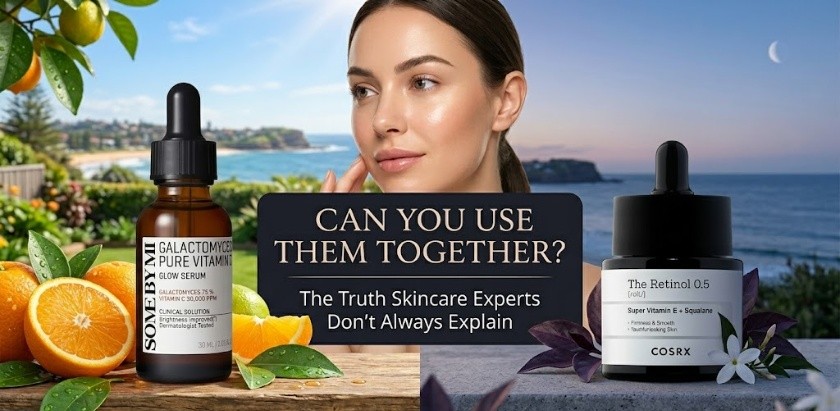
If you’re serious about skincare, you’ve probably asked this question at least once:
“Can I use Vitamin C and Retinol together?”
Some say yes. Some say absolutely not. And then your skin ends up confused, irritated, or just… not improving.
Let’s break it down properly—so you can build a routine that actually works and drives visible results like brighter skin, smoother texture, and fewer wrinkles.
Vitamin C vs Retinol: What’s the Difference?
Before mixing anything, you need to understand what each ingredient actually does.
Vitamin C (Morning Power Antioxidant)
Vitamin C is a brightening and protective antioxidant that helps:
- Fade dark spots and pigmentation
- Boost collagen production
- Protect skin from UV and pollution damage
- Improve overall skin glow and clarity
👉 Best used in the morning, under sunscreen.
Retinol (Night Repair Active)
Retinol is a Vitamin A derivative that works deep in your skin while you sleep:
- Speeds up skin cell turnover
- Reduces fine lines and wrinkles
- Clears acne and clogged pores
- Improves skin texture over time
👉 Best used at night, because it increases sun sensitivity.
Can You Use Vitamin C and Retinol Together?
Short answer: Yes—but not at the same time.
Using them together in one routine can:
- Increase irritation
- Cause redness and dryness
- Weaken skin barrier if overused
But using them in a structured routine is actually one of the most powerful anti-aging combinations in skincare.
The Correct Way to Use Vitamin C + Retinol
Here’s the dermatologist-approved approach:
☀️ Morning Routine
- Cleanser
- Vitamin C serum
- Moisturizer
- Sunscreen (SPF 30+ minimum)
🌙 Night Routine
- Cleanser
- Retinol (start 2–3x per week)
- Moisturizer
👉 Never layer them in the same step unless your product is specifically formulated for it.
Why This Combination Works So Well
When used correctly, Vitamin C and Retinol become a power duo for skin transformation:
- Vitamin C protects and brightens during the day
- Retinol repairs and renews at night
- Together, they target aging, pigmentation, and dullness from both angles
This is why dermatologists often call it a “gold standard anti-aging routine.”
Common Mistakes That Ruin Results
Avoid these if you want real progress:
- Using both at the same time in high strength
- Skipping sunscreen while using retinol
- Starting with strong retinol too quickly
- Over-exfoliating while using active ingredients
Skincare is not about intensity—it’s about consistency and balance.
Who Should Use This Combination?
This routine is ideal if you are dealing with:
- Uneven skin tone
- Early signs of aging
- Acne scars or pigmentation
- Dull, tired-looking skin
- Loss of elasticity
Even in your late 20s, this combination can be a preventive anti-aging strategy.
Final Verdict
Yes, Vitamin C and Retinol are both powerful—but they are not meant to fight for attention in the same routine.
Instead, think of them as:
- Vitamin C = Daytime defense + glow
- Retinol = Nighttime repair + renewal
Used correctly, they don’t cancel each other out—they complement each other for visible skin transformation.
 Ampoule
 Cleanser
 Mask
Mask Moisturiser
 Reedle Shot
 Serum
Serum Shooting Cream
 Spot Treatment
 Sun Care
 Toner
Toner